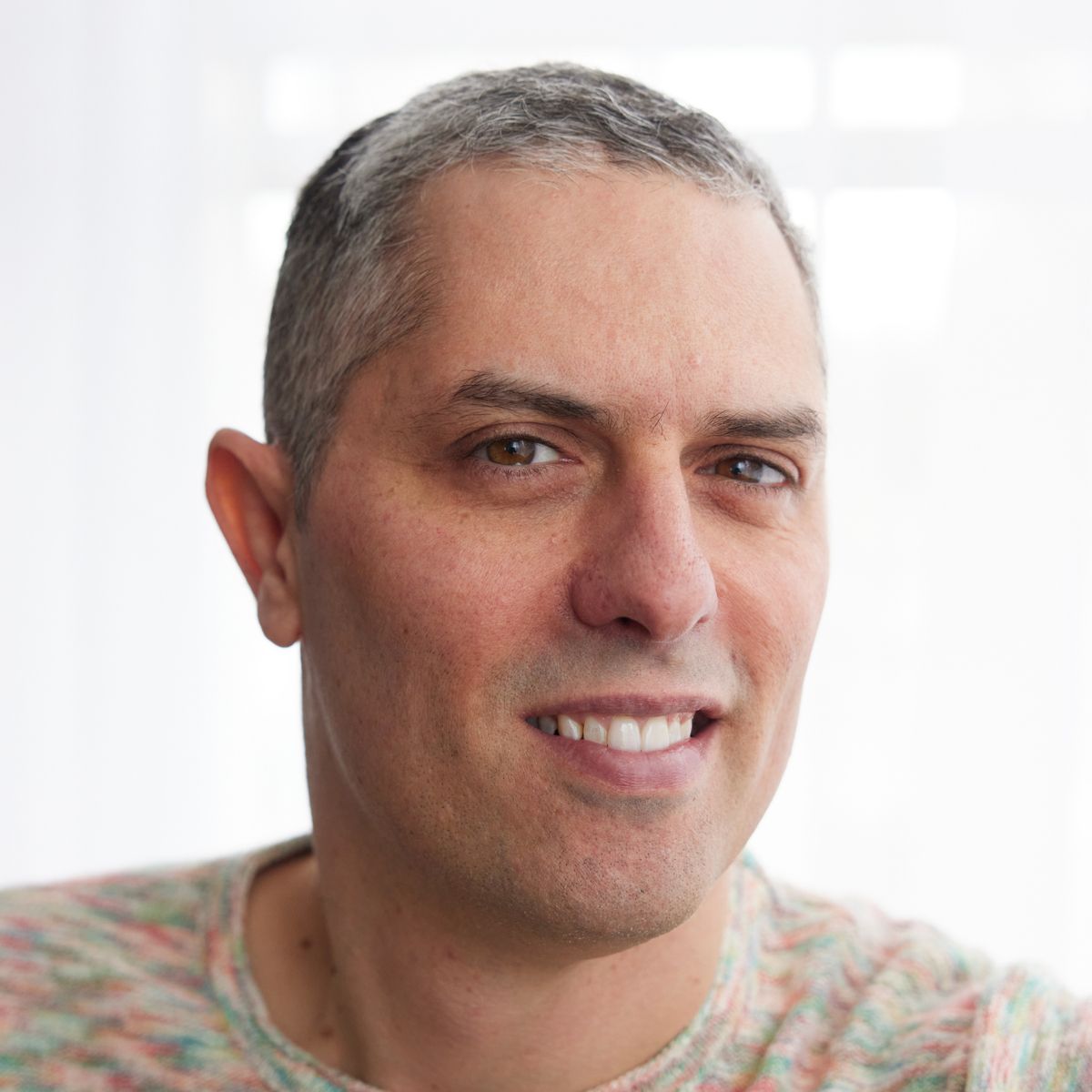
Of all the industries AI will transform, Kira Radinsky believes chemistry and biology will change the most.
Kira is the co-founder and CTO of Diagnostic Robotics, which uses AI to automate the administrative work that's crushing healthcare teams — so clinicians can actually focus on patients. She's also the co-founder of Mana.bio, where they're accelerating drug discovery by orders of magnitude.
She'll tell you she's terrible in the lab. Not because she isn't brilliant, but because she can't pipette without killing the cells. So she’s thrilled that thanks to her skills in data and AI she was able to realize her childhood dream of being a scientist:
“I'm not trying to automate everything… Like when, when you say automate drug discovery, I'm not gonna discover everything. I just want to accelerate it, which comes back to my childhood dream: I just didn't want to do it myself. I just want AI to replace me as a scientist. That's it.”
But this episode is about more than healthcare. It's about how to build systems that get smarter over timefeedback loops, causal inference, incentivizing algorithms to take risks, and knowing when to optimize for ROI instead of accuracy. Lessons that apply whether you're building in biotech or not.
We cover:
How growing up Jewish in Soviet Ukraine — and fleeing to Israel just before the Gulf War — shaped Kira's obsession with predicting the future
How she built a system that successfully predicted real-world events, including Cuba's first cholera outbreak in Cuba in 130 years
How Mana.bio is using AI to build "rocketships" that deliver drugs to the right cells — and how they've done in three months what used to take 20 years
Why predictions are only valuable if there's something you can do about them — and why that makes healthcare an ideal field for AI
How to incentivize algorithms to make bolder predictions (it's easy to predict there won't be an earthquake today; it's much harder to say there will be)
Why causal inference is the most underrated tool in machine learning right now
How healthcare AI can perpetuate racial bias — and what builders need to do differently
Chapters:
01:44 Why predictions are so important to Kira: lessons from fleeing Soviet-era Kyiv
05:10 Building a prediction engine from 150 years of news
08:35 How Kira predicted the Cuba cholera outbreak
09:50 Returning to biology by way of data
12:50 Predicting healthcare outcomes by finding your patient's twin
17:53 The racial bias hiding in healthcare AI
19:15 Building Mana.bio and accelerating drug discovery
24:33 "In three months, what did what used to take 20 years"
31:44 Builder tips: ROI, causal inference, and teaching algorithms to explore
35:07 Planning: Where generative AI needs improve
Links & Resources
Kira Radinsky on LinkedIn
If you don’t already get Future Around & Find Out emails, go ahead:
Future on…
~ Dan